Most patients who lose teeth eventually hear the same recommendation: dental implants. But for patients with severe bone loss in the upper jaw, standard implants may not be possible without first undergoing extensive bone grafting. Zygomatic implants offer an alternative, one that in many cases bypasses the need for grafting entirely. At Star Oral Surgery, Dr. Bobst performs this advanced procedure for patients throughout the Treasure Valley who have been told they are not candidates for traditional implants.
What Makes Zygomatic Implants Different from Standard Dental Implants?
Standard dental implants are placed vertically into the jawbone and rely on sufficient bone height, width, and density to achieve stable integration. When that bone has been lost due to prolonged tooth absence, periodontal disease, or other factors, traditional implants cannot be placed without first rebuilding the foundation through bone grafting or a sinus lift.
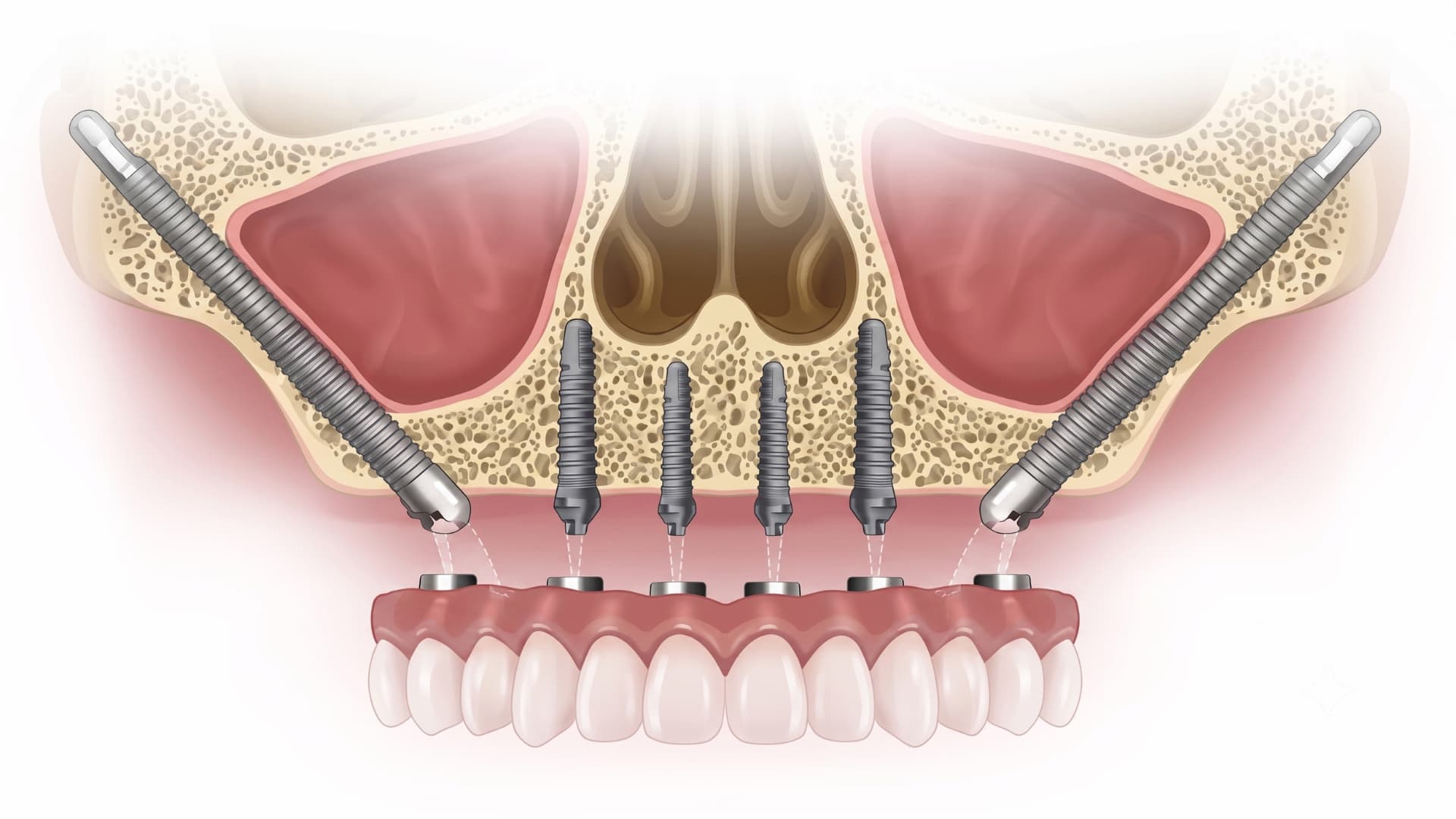
Zygomatic implants take an entirely different approach. Rather than anchoring in the upper jawbone, these longer, angled implants bypass the maxilla entirely and anchor in the zygomatic bone, commonly known as the cheekbone. The cheekbone is dense and stable even when the upper jaw has experienced significant resorption, making it a reliable anchor point for full-arch restoration.
Key differences at a glance:
- Anchor point: Standard implants anchor in the jawbone. Zygomatic implants anchor in the cheekbone.
- Length: Zygomatic implants are significantly longer than conventional implants to reach the zygomatic bone.
- Bone grafting: Standard implants often require grafting when bone loss is present. Zygomatic implants are designed as a graftless solution.
- Candidacy: Zygomatic implants are specifically designed for patients with severe upper jaw bone loss who cannot receive standard implants.
In many cases, zygomatic implants are used alongside traditional or pterygoid implants as part of a hybrid treatment plan, depending on each patient’s bone anatomy and prosthetic needs.
Who Is a Candidate and What Does the Procedure Involve?
Candidacy:
Zygomatic implants may be the right option if you:
- Have severe bone loss in the upper jaw and have been told standard implants are not an option
- Want to avoid sinus lifts or extensive bone grafting procedures
- Are seeking full-arch rehabilitation with a fixed, non-removable restoration
- Currently wear removable dentures and want a permanent solution
- Are in good overall health and able to undergo oral surgery
A full clinical evaluation and 3D cone beam CT imaging are required to assess your bone anatomy and confirm candidacy before any treatment is planned.
What the procedure involves:
Zygomatic implant surgery is performed in a fully equipped surgical suite under IV sedation or general anesthesia, depending on the case’s complexity. Dr. Bobst uses 3D-guided surgical planning to place the implants at precise angles that engage the cheekbone while protecting surrounding anatomical structures.
In many cases, a fixed temporary prosthesis is placed the same day as surgery, meaning patients leave with a functional full-arch restoration before the final healing phase is complete. The permanent prosthesis is typically delivered after full integration, which takes place over three to six months.
What to expect during recovery:
Recovery following zygomatic implant surgery is similar to other full-arch procedures, though patients may experience slightly more swelling or sinus sensitivity due to the implant trajectory.
- Swelling typically peaks within 48 to 72 hours and then begins to subside
- A modified soft-food diet is required for several weeks following surgery
- Activity restrictions and prescribed medications should be followed as directed
- Follow-up visits are scheduled to monitor healing and integration progress
Star Oral Surgery provides detailed post-operative instructions at discharge so you have clear guidance throughout every stage of recovery.
How Much Do Zygomatic Implants Cost Compared to Bone Grafting?
This is a question patients ask frequently, and it is a fair one. Zygomatic implants are a more advanced surgical procedure than standard implant placement, and the cost reflects that level of complexity. However, for patients who would otherwise require extensive bone grafting, multiple sinus lifts, and a prolonged staged treatment timeline before implants could even be placed, zygomatic implants can represent a more direct and streamlined path to the same outcome.
No specific pricing is published at Star Oral Surgery, as treatment costs depend on the scope of your case, the number of implants required, and whether any additional procedures are involved. Your full treatment plan and associated fees will be reviewed clearly during your consultation with Dr. Bobst.
For patients managing costs, HSA and FSA accounts can often be applied toward oral surgery procedures. CareCredit and PatientFi financing options are also available through our office to help make treatment accessible.
Schedule a Consultation at Star Oral Surgery in Star, Idaho
If you have been told you are not a candidate for dental implants due to bone loss, zygomatic implants may change that conversation. Dr. Bobst serves patients throughout the Treasure Valley, including Star, Boise, Meridian, Eagle, Nampa, and surrounding communities, and welcomes complex cases that require advanced surgical solutions.